
THE INCONVENIENT TRUTH BEHIND THE INCONVENIENT TRUTH
Twenty years after An Inconvenient Truth, emissions are still rising. To arrest global warming we must harness the only motive that works.
By Bruce McCabe
September 24, 2026
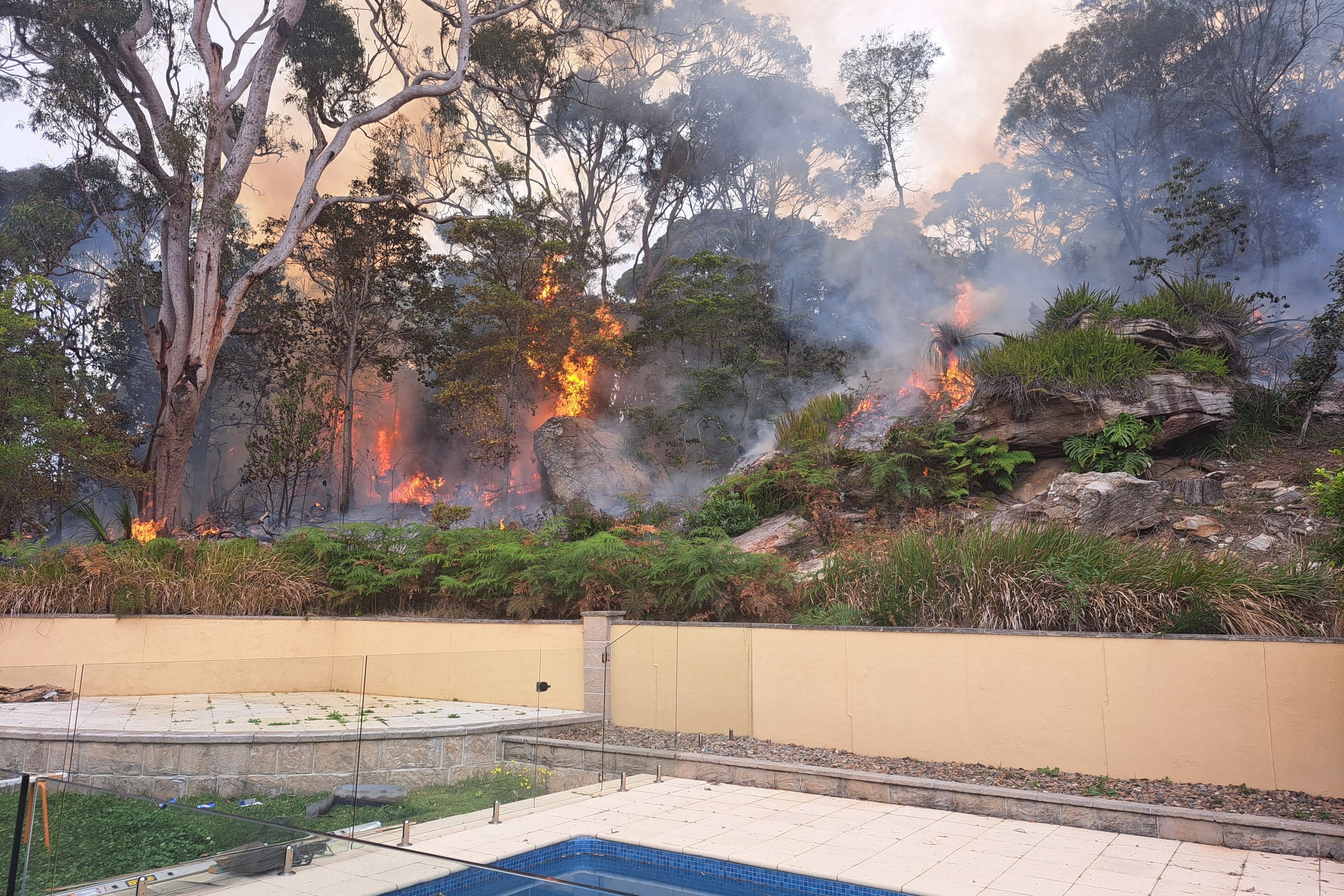
In 2025, another 57.8 billion tonnes of greenhouse gases wafted upwards from our chimneys and tail pipes and flaming treetops.[1] Four-fifths of this addition will remain in the atmosphere for between hundreds and thousands of years. Some of it will still be trapping heat in ten thousand years.[2] The last 11 years have included all 11 of the warmest years observed in the instrumental record, and the speed of warming is more than ten times the speed of the fastest known natural sustained change in the Earth’s history.[3] The physics of the universe will not change: the temperature cannot stabilize until the concentration of greenhouse gases reduces, and the concentration cannot reduce until the annual rate of emissions is cut to nearly zero. Consequently, the earth is locked into crashing through two degrees Celsius, and every tonne pushes our world closer to catastrophic tipping points in melting ice-sheets, collapsing currents, thawing tundra and ocean acidification.
We have all the means available to make steep emissions cuts, and yet, in the pure, immutable mathematics of tonnages, concentrations and temperatures, we are still going backwards. Why?
EMISSIONS PERMISSIONS
The gut response is to blame the fossil fuel industry for digging the stuff up, other industries for burning it, and the politicians who let them keep doing it. This is partly valid. But to assign blame solely at the top is to deny the source of their power.
A great climate activist once told the story of lobbying a politician who seemed to “get it,” only to be admonished to re-direct his efforts towards the public, because once they were convinced, every politician would turn “green.” The activist was David Suzuki. The politician was Al Gore – pre An Inconvenient Truth. The lesson was universal: in liberal democracies, politicians set the rules by which businesses play, but people choose the politicians based on the rules they promise. Emissions permissions flow upwards, not downwards. Conversely, while politicians can be swayed by donors, and act for one at the expense of others, nothing keeps them in power when a population is sufficiently roused against them. And when people believe their future is really being screwed, they turn into mobs from which even dictators flee.
Deafened by the emissions-rage dominating political discourse in your country? No, me neither.
So, here is the short version of why we don’t reduce emissions: because we don’t vote for it.
MOMENTS OF DECISION
We say we want climate action. Ask a friend, ‘Do you want to reduce emissions?’ and nine times in ten you will hear ‘yes.’ In a 2024 survey of 130,000 individuals across 125 countries, 89 percent wanted intensified political action and 69 percent said they would be willing to contribute 1 percent of their income directly to the cause.[4] In a survey of 24,000 EU citizens, 94 percent said it was important for their country to adapt to climate change and 85 percent agreed that spending on climate adaptation was required urgently to avoid even higher costs in future.[5] Another study found 73 percent of people in China, 77 percent in India and South Africa, 85 percent in Brazil and 88 percent in Iran wanted stronger action on climate change.[6]
Now ask this of the same friend: ‘At the next election, will you vote for the candidate who promises to reduce emissions?’ and – oh boy – wait for the caveats. If it doesn’t cost too much. If it doesn’t ruin the economy. If I don’t have to give up my SUV. If I can still fly long-haul. If I don’t have to pay more taxes. If I can still afford my groceries. That’s if you even have the conversation, because chances are your friend will change the subject. What the surveys don’t capture is the medical bills, job pressures, family challenges and other trials of life crowding our heads, and how our thoughts harbor many wants, some of which are in opposition to each other, and how at moments of decision—such as elections—the immediate costs of living loom large and threats from climate change fade to nothing.
So, it is not that most people don’t desire climate action. It’s just that, in the context of all their other wants, when it comes to the crunch, it doesn’t even register.
And what of all those accelerating renewables deployments and electric vehicles purchases? Aren’t they indicative of people hungering for climate action? Hardly. The overwhelming motivation for both institutional and personal deployments is … dollars. The return on investment is a no-brainer.
I remember the precise moment, presenting to a global infrastructure investment company, when I pointed to a chart comparing the levelized cost of electricity across various energy sources and declared that henceforth solar would always be cheapest, because there was still plenty of headroom to improve solar cost-efficiency and almost none to make fossil sources cheaper. The preceding section on climate change evoked not a single question. Now, they picked up pens and started asking questions all at once. Nearly a decade on, I can truthfully say that no member of any audience has ever asked me for more detail on the emissions implications of different energy sources. Not once. Not ever. They have only ever asked about the dollars. Even more starkly, in the many hundreds of personal conversations I've had with friends about EVs or rooftop solar installations or home batteries, not once has any of us ever shared CO2 tonnages, even though these savings are calculated and displayed daily on our apps. Installation costs and electricity bills and utility feed-in tariffs and payback periods, constantly. Emissions tonnages, never. No matter that some of my friends are avowed environmentalists. No matter that I considered cutting emissions a huge part of my own justification. Our conversations have always centered on the dollars. Why? Not because we don’t value the cuts, but because we have this shared understanding: the dominant decision-factors are financial.
What dominates your conversations on renewables with your friends? The clean energy story, as with every other energy transition that preceded it, is a money story.
THE REAL REASON WE DON’T CUT EMISSIONS
Here is where I’ve landed: the real reason we don’t cut emissions is, we don’t vote for it because most people believe that either the costs of climate change will be insignificant to them, or that climate action will cost them more, personally, than inaction.
‘Most,’ because in any given democratic population, societal-level action is dictated by the preponderance of votes.
‘Believe’ because costs are subjectively construed from snippets of insight weighed according to circumstance, science education, direct experience of climate impacts, whether you get your news from Fox or the BBC, and so on. Educated or ignorant, distracted or hopeful or delusional, we are talking about belief.
‘Costs’ because people focus almost universally on costs when it comes to climate action and inaction. Perceived costs of climate inaction might include damage to property from fires/storms/floods, displacement, jobs, hardship, crop losses, and so on. Perceived costs of acting on climate change might include higher taxes, replacing gas heaters and cooktops, less air travel, giving up an SUV, being labelled ‘woke’ by friends, and so on. If a pro-action political candidate appears economically naïve then the perceived costs will likely include the prospect of poor economic management. Although many of these perceived costs are non-financial, the foremost costs in the modern mind are financial—dollars.
‘Personally’ because the more personally applicable the cost, the heavier the weighing. Me trumps we. We might extend this to be ‘personal and proximate’ because the closer the cost is perceived in place and time, the heavier the weighing. People in Kiribati, Tuvalu and Bangladesh about to lose their homes to sea-level rise perceive a far greater and more imminent cost than wealthy Manhattanites with bolt holes in Vermont. Costs beyond 5-years get scant weighing. Costs ‘within my lifetime’ or ‘across my children’s lifetimes’ or ‘for generations to come’ often get no weighing at all.[7]
This is what underpins our climate behaviors.
It is why Norwegians can lead the world on electric vehicle adoption while simultaneously tolerating their country being the world’s fifth largest exporter of crude oil, and why Australians boast the world’s highest penetration of rooftop solar while simultaneously tolerating their country being the world’s second largest exporter of coal and third largest exporter of liquified natural gas.[8] [9]
It is why US citizens tolerate the perversity of corporations such as Amazon and Google and Microsoft and Meta, after years of repeated public commitments to reduce emissions, suddenly dropping all pretense in their race for the El Dorado of AI, in service of which they are rolling out datacenters in such quantity that they soaked up 6.9 percent of the 2025 US electricity supply and 2.5 percent of the global electricity supply and are now being equipped with onsite gas-fired power stations big enough to rival the worst polluting coal-fired power plants,[10] [11] and why those that do protest are mobilized by local fears of what these datacenters will do to their local utility bills and water supplies and noise levels—not by global emissions.[12]
It’s why manufacturers are not transitioning away from coke-fired steelmaking anytime soon, and why construction companies are not weaning themselves off Portland cement, and why no one anywhere is making serious efforts to curb high-emissions long-haul air travel.
It is why Brazilians still burn the Amazon for beef grazing, and Indonesians still burn rainforests for palm oil plantations.
It is why many populations happily spend their tax dollars on adaptation (higher seawalls, flood prevention, air-conditioning) while fiercely resisting expenditure on permanent emissions reductions; they perceive adaptation to be a better personal return on their dollars within their lifetime.
It is why whenever significant wealth generation opportunities conflict with emissions goals, the emissions goals get steamrolled.
It is why financially-driven renewables and EV deployments, even in all their exponential glory and about to reduce the annual rate of emissions for the first time, will not by themselves be nearly enough.
WHO WE ARE
If my calling out the selfish and transactional nature of our souls offends you, know this: it doesn’t exactly bring me joy either. If it helps, I'm not talking about the one-tenth of the global population living on less than three dollars a day,[13] or the financially distressed who must necessarily restrict their horizon to the next paycheck or the next meal. Nor am I talking about people who invested in clean technology when it was still expensive, and the hundreds of millions who daily do everything they can to minimize their emissions footprint—and vote accordingly. I’m talking about the majority—who don’t.
Nor is it to deny our altruism. In my travels I am daily reminded of the immense capacity for kindness of ordinary people in all parts of the world. Many of the scientists and social workers and environmentalists I meet are selfless to a degree that makes me cry with happiness. We are altruistic and self-interested. In fairness to our species, for 300,000 years our boundaries of care have stopped at family, village, tribe. It is only in the last few thousand years that we have concerned ourselves with nation-states, and only in the last hundred that we have been asked to consider the consequences of our actions on all of humanity and all other species. In evolutionary terms, we might say that our collective impact on our environment has suddenly outrun our imperative to prioritize the survival and advancement of our genes.
Regardless, we must confront it, because it is the root cause of all climate inaction.
DENIAL AND POLITICIZATION ARE SYMPTOMS, NOT CAUSES
Avoidance, climate denialism and climate politicization—all frequently cited as reasons for failed public response on climate change—are firmly rooted in the same personal weighing of costs.
People don’t want to change. They don’t want to change because it is perceived as an effort and a cost to themselves, and when they don’t want to change, a defense is avoidance. Someone else will take care of it. It’s too far away to worry. Out of sight out of mind. Simple ignorance may have been a factor ten years ago, but with the evidence of climate change now so prevalent, today’s ignorance is mostly of the willful variety. They want not to know, because to accept the reality is to accept the obligation.
Denialism springs from this. “The science isn’t certain” or “It’s not human-caused so there is nothing I can do about it” are simply added defenses: if we are not certain of the cause, how can we be selfish for not doing our bit to solve it? As the contradictions pile up, so too the mental gymnastics. Ice caps melting? Reefs dying? Fake news! 11,000 scientists say the problem is us? [14] A conspiracy! Why? To ruin the economy! To get more money for those greedy scientists! The deep state! The Illuminati! Whatever makes me not have to change. Misinformation becomes ammunition, fellow deniers a community to cling to:- researchers such as Kari Marie Norgaard at the University of Oregon and Dan Kahan at Yale have long documented the symbiosis between personal defense needs and community-level denialism.[15] [16] [17] [18]
So too, with climate politicization. Political bifurcation on the fact and threat of global warming is not unique to the US, but nowhere else is it as prevalent as in the US, where today 75 percent of Democrats and Democrat-leaning adults accept the fact of global warming, as against only 21 percent of Republicans and Republican-leaning adults.[19] The origins of the divide reveal the motivations. The need to act on global warming had bipartisan support until the late 1990s, when the Clinton administration moved to implement clean energy policies and helped broker the Kyoto Protocol committing 37 industrialized nations to reducing greenhouse emissions. Oil and gas companies, then Republican lawmakers, lobbied against the protocol because less-industrialized countries were offered timetable concessions to help secure their participation (as had been done in the highly successful Montreal Protocol to phase out CFCs). When Texas governor and ex-oilman George W Bush won the 2000 election against outgoing vice president Al Gore, he promptly withdrew the US from the Protocol on the specific basis that it ceded economic advantages to China and India. No matter that the advantages were temporary. No matter that the US had already benefited from its prior emissions. A playing field tilted even slightly against US money interests was anathema. The gap widened further in 2006 when Al Gore’s book An Inconvenient Truth came out with the movie of the same name, which in turn spooked the fossil fuel industry into pouring money into sham think tanks and campaigns discrediting the science. Conservative media amplified the anti-science. Everyone doubled down. Rejection of global warming as fact or threat has remained the entrenched position of the Republican party and its supporters ever since.
Why so much more prevalent in the US? For a cultural explanation we might do worse than look back to that great observer of American society, Alexis de Tocqueville, who wrote in 1835, “I know of no country, indeed, where the love of money has taken a stronger hold on the affections of men,”[20] but lest we think US emissions intransigence is all about business-minded Republicans maximizing their wealth, there is another aspect: US poverty rates are greater than any of the other 25 nations in the OECD.[21] One-quarter of Americans live “paycheck-to-paycheck,” spending 95 percent or more of their income on necessities, and a full 40 percent live with the financial stress of 25 days or less of liquid savings.[22] For these Americans, any potential increase in short-term personal costs is a legitimately frightening prospect. Scare campaigns resonate. Reducing emissions will cost you. Cost who? First the oil and gas companies, then businesses saddled with compliance costs, then the economy, then your taxes and your jobs (failing economies cost jobs, don’t they?) then your savings, your SUV, your freedoms … Cost YOU!
Make no mistake: the roots of climate politicization were, and remain, all financial. And while this is depressing at one level, confronting it is a giant step towards a solution.
WAITING WON’T WORK
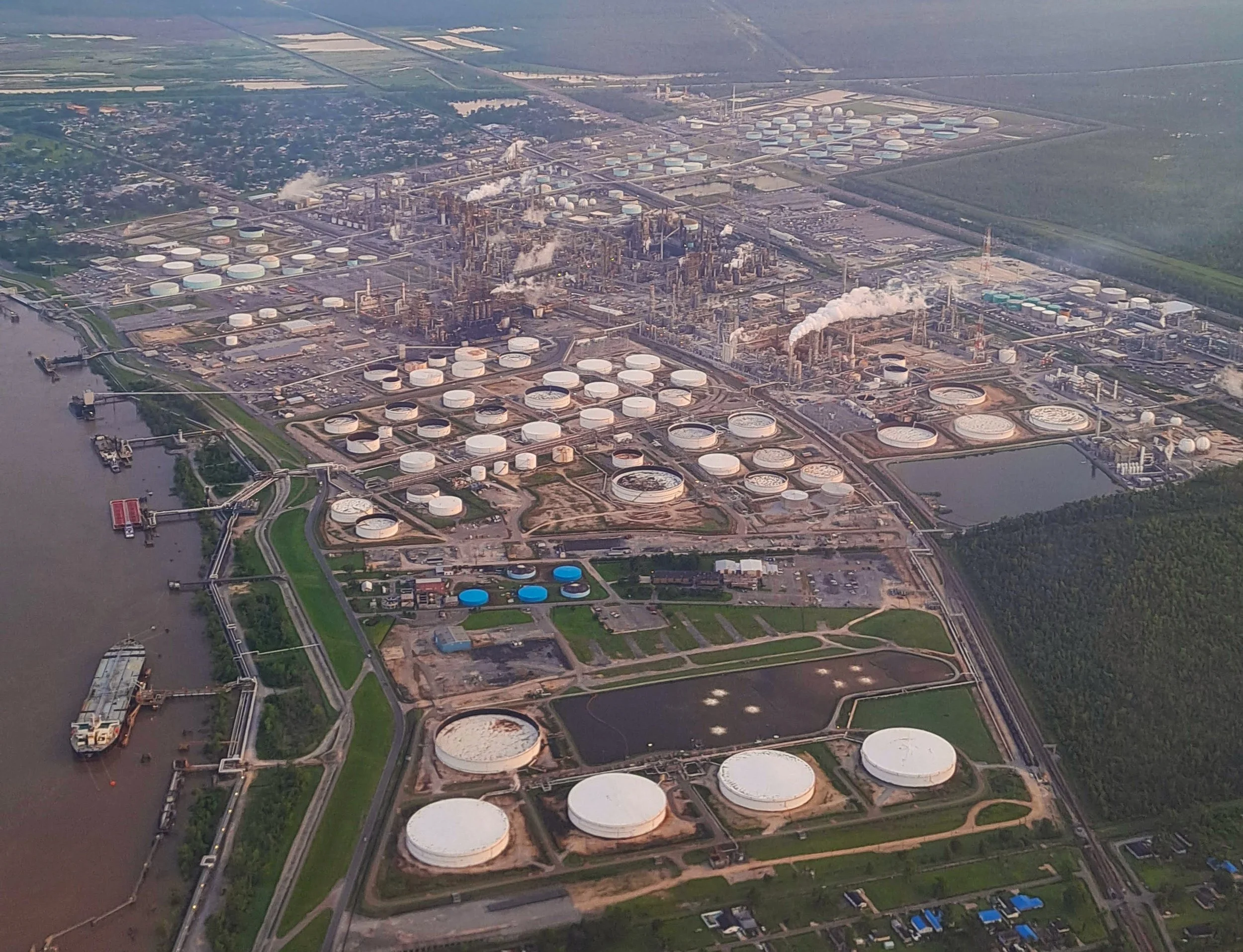
Theoretically, the trajectories should one day change the politics all by themselves. The costs of more ferocious forest fires, hotter heat waves and higher surge inundations, after all, can only rise and become more proximate to more people. Transitions to renewables can only transfer power and influence (even if slowly) from fossil corporations to clean energy industries. The combination can only broaden the discourse and open more minds to climate goals. Votes, then politicians and policies, must surely follow.
Theoretically. The more I look at the evidence from my own travels, the more I am forced to concede: ‘one day’ does not mean soon.
Take the US, for example, where a political tipping point would make a huge global difference, not only because it is the second largest global emitter but because it accounts for 26 percent of global GDP and when the US finally does reset its emissions permissions, the effects will ripple out to trading partners everywhere.[23] And while it doesn’t seem the case from current Federal rhetoric, the renewables political transition is already well underway, driven by money savings. I expect more than half of all US states to be operating 85-100 percent renewables electricity grids by 2050. Good news! But on emissions reductions more broadly? Less than half of US adults (48 percent) say they believe global warming is caused by human activities, a proportion down five percent on 2022.[24] Notwithstanding the fact that responses sometimes reflect more the messages people want to send than what they believe, I can confirm first-hand that a great many US citizens really do believe that global warming is a hoax, and many others believe a warming world will be economically advantageous to the US. Climate denialism is so deeply wired into Republican identity it cannot be quickly unwound. Most damningly, climate change ranked 21st as an issue in the 2024 US elections, where citizens voted into the White House an open climate denier who aggressively promotes the burning of more fossil fuels via lawmaking and executive action and rhetoric, despite that Presidential candidate publicly telegraphing all of these intentions publicly and repeatedly in advance.[25] If greenhouse gas pollution ranks so low in US voter priorities, can we really expect a reversal of US emissions policy from the next administration? Or the one after?
The Australian experience is even more instructive. The Australian electorate travelled an almost identical politicization path as the US – dalliance with Kyoto, ferocious lobbying from coal and gas corporations (a 2019 analysis found Australia’s overall emissions impact, including exports, ranks third behind Russia and Saudi Arabia), ‘climate wars’ between political parties that supported carbon pricing and parties fronted by climate-deniers who torched it, conservative media fanning the flames of anti-science from the sidelines. [26] [27] Then, in the 2022 elections, an apparent breakthrough: six independent candidates who sponsored climate action ousted conservative politicians. And in the 2025 elections, an even bigger shift: seven climate independents elected and the left-leaning Labor Party promising a pro-renewables energy policy and winning 94 out of 150 available seats in the House of Representatives—the highest number ever won by any party in any election. Was this a political tipping point on emissions? It certainly looked like one.
Alas, no. The Labor government, despite its landslide victory and supposed green intentions, despite 61 percent of Australians saying it should do more to address climate change, despite scientific consensus that the no new fossil extraction capacity is required to meet all future global energy demand, and despite climate independents repeatedly calling it out for hypocrisy, still fully supports coal and gas exporters, stubbornly refuses to curb their emissions, and still issues new licenses for coal mines and gas fields and gas fracking.[28] [29] Why? Most likely its leaders believe that daily cost of living issues still so dominate the public mind—not the costs of wildfires or floods, not the cost of bleaching of the Great Barrier Reef, and certainly not the costs of exporting coal and gas into a warming world—that even the very softest action (halting licenses for new coal mines) will allow conservatives to twist voters into believing it will hurt them financially. The most recent voter trend has been a shift towards populist reactionary parties, suggesting that assessment may be correct.
Australians may have passed a political tipping point on renewables (driven by the dollar savings from their rooftops) but while they continue voting for representatives who prioritize fossil profits over bushfires, they have not reached a political tipping point on emissions.
What about those enlightened Europeans? Here too, the politics are not nearly so clear-cut as we expect. Visiting the Netherlands, for example, I am everywhere surrounded by physical reminders of the cost of climate change. Dutch citizens are paying 2 billion Euros per year for flood protection.[30] 93 percent of them agree that it’s important to adapt to climate change, nearly half the population believes adaptation should be a national priority, and 77 percent agree that spending on climate adaptation is required urgently to avoid higher costs in the future.[31] Where else could the costs of climate change be this stark and this proximate? And yet even in the Netherlands, new North Sea gas exploration projects are underway, new fossil fuel subsidies have been introduced, the agricultural sector remains largely excluded from climate policies, and an official government website still includes the fossil-promoted fantasy that “In the future, people will also be able to capture CO2 using large filters … between 2040 and 2050, carbon removal technology will be able to remove around 20-25 megatonnes of atmospheric CO2 each year, equivalent to around 10% of the Netherlands’ total emissions in 1990.”[32] [33] [34] Dutch voters too, continue to prioritize fossil profits over floods.
Barring the galvanizing effect of a truly catastrophic ecological tipping-point (by which time it will be too late) or the unwinding of ‘market first’ and ‘growth above all else’ neoliberalist doctrine, coupled with a retreat from consumerism and a social recalibration of ‘success’ away from dollars towards more purposeful social contributions (all of which will take decades) human priorities cannot be expected to change. If executives can continue privatizing the profits of emissions while socializing the costs, they will. If voters see greater personal short-term financial benefit in voting for climate inaction over action, that’s how they will vote. It may be that humankind takes all the wins the renewables transition has to offer and sits on its laurels for another decade. It may be that most members of our species, like frogs in a pot, continue voting for inaction even as their crops brown and ocean acidification destroys their food chains. To posit timetables for political change is, therefore, to peddle false hope. Waiting won't work. Better, if we want to make a difference, to bring the timetables forward by connecting with the motives that we know do work.
A GLOBAL TRUTH
While most of my examples are drawn from liberal democracies, where emissions permissions are clearest, I believe the same priorities apply everywhere. In China, for example, where entrepreneurs and government leaders have backed solar, batteries and EVs heavily enough to make the country the leading manufacturer and exporter of all three, the goals were growth, export earnings, energy security, industrial efficiency and cost effectiveness. The ecological benefits are tremendous and we should celebrate them for all our worth, but the entrepreneurs and government officials did not do it to save Pacific atolls or ease the typhoons hitting Guangdong province, because if they did, if emissions were the primary motivation, a one-party state would most certainly have managed steep cuts by now instead of increasing the annual emissions rate in 2025 to 17.9 billion tonnes—fully 30 percent of the global total.[35] Ask yourself this: if it came to a choice between economic growth or cutting emissions, which goal do you think China would sacrifice?
HOW TO MAKE A BETTER FUTURE
1. Implement carbon dividends
Putting a price on carbon is the most powerful and equitable and broadest-acting lever available to change industrial emissions behaviors. It is readily implementable within existing government frameworks for sales taxes and duties. Because it is a financial incentive rather than an edict or hard limit, it has the advantages of letting market forces do the heavy lifting without onerous compliance overheads, and it leaves businesses latitude in the timing of their individual cuts. It has been highly successful, and associated with strong emissions cuts and strong economic outcomes in places like Sweden. It is the only mechanism capable of incentivizing emissions cuts soon enough and deep enough.
It is also politically challenging to implement as a one-way tax, because fossil boosters find it easy to tap into the motivational reasons we have discussed, and twist voters into believing carbon pricing ‘will cost them’ – even when it won’t.
The most politically potent way to implement carbon pricing, therefore, is as a carbon dividend, by returning one-hundred percent of the money collected to citizens.
From the government’s perspective, a carbon dividend is revenue neutral, which is immaterial because the point is to incentivize industrial change, not raise revenues. From the business perspective, we need to only price-in a fraction of the real cost of carbon to incentivize change. Most importantly, from the voter’s perspective, emissions action flips from a cost to a benefit, in real dollars flowing into real bank accounts each and every year, while still preserving choice. Carbon-intensive consumer products become more expensive, but the dollars distributed to citizens amount to the same. If people choose to spend more of their dollars on less carbon-intensive products, they come out ahead. Equalized lump-sum dividends have been shown to make lower-income households better off in real dollars while imposing modest costs on wealthy households (which spend more on consumer products).[36] [37] [38] [39] [40]
“If it can be popular in Alaska, where oil exports have been central to the economy for so long, it can be popular anywhere.”
Experiences in places like Canada and Austria have demonstrated that to survive sustained fossil industry attacks and enjoy continued support from the majority of the population, the benefits must be utterly salient. That means not delivering them as tax cuts or imbedded in lower health insurance premiums but paying them in dollars. And not paying quietly, but with a strong annual reminder as to how many dollars are going in, where they have come from, and why they represent both a direct personal financial win and a win for the economy.[41]
There are more success ingredients. Extensive public dialog and social deliberation is important. A carbon border adjustment mechanism preserves a level playing field for imported products and disincentivizes the ‘offshoring’ of pollution. Salience of benefits should be prioritized over efficiency. Independent review bodies, such as the UK’s expert-led Committee on Climate Change which came out of the Climate Change Act of 2008, can help sustain climate policies through the vicissitudes of new governments. A high level of public trust in the enacting politicians (rare) helps. Tailored communications help. [42] [43] [44]
I take particular inspiration from a visit to Alaska, where I learned about the Alaska Permanent Fund, which collects fees against oil production to future-proof the economy.[45] [46] What’s most interesting about this fund is that it distributes a dividend against the accumulated capital to every resident, unconditionally, every year. Sometimes it’s $1,000, sometimes it’s as high as $3,200, and it is extremely popular.[47] If such a scheme can be popular in a conservative Republican state where oil exports have been central to the economy for so long, a carbon dividend can be popular anywhere. Again, I’m not suggesting paying out only earnings on capital as in the Alaskan case, I’m saying the most potent way to reduce emissions and reverse emissions politics is to return all the money to citizens. Harness the money motive for all it is worth.
2. Share the real, personal and proximate costs of climate inaction
First, we must actually talk. Two thirds of Americans avoid discussing global warming with friends and family.[48] That’s to avoid conflict. I’ve learned, however, that people everywhere—every state, every country—welcome conversations when they are mutually generous and built as much upon listening and empathizing as speaking. It helps to remind ourselves that people disagreeing with us on climate action are driven by real concerns and can only act on the narratives available to them. The best way to introduce more realistic narratives is to listen, be accepting, stick with the evidence, and be honest about what you don’t know.
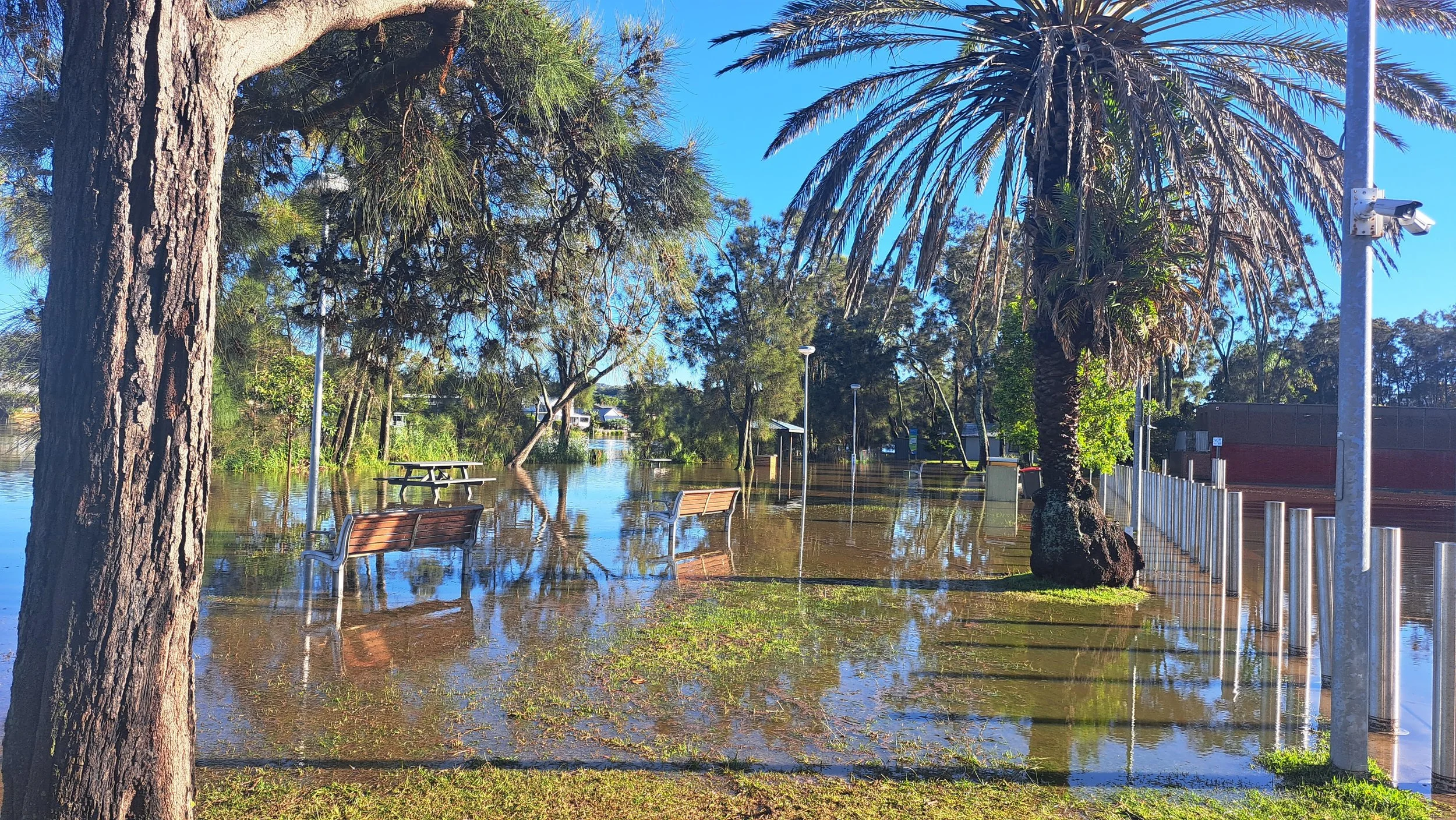
Second, talk dollars. Dollars are what people engage with. Dollars are what change votes. There are high-integrity data everywhere. Insurance industry figures showing a 457 percent increase in frequency of, and a 1,482 percent increase in average annual insured losses from, catastrophic hail, flood, storm and wildfire events between 1983 – 2022.[49] European Commission estimates that wildfires in the EU costs EUR 2.5 billion every year in damage to property and infrastructure (a figure surpassed in just a few months in 2026).[50] Studies showing the long-term cost of inaction will be orders of magnitude higher than the costs of action are useful – for example showing that sea level rise and storm surges will cost Australians AUD 855 billion this century[51] – but proximate costs are the most meaningful. Households across large swathes of the US, for example, are already paying over $1,000 per household every year in climate change-driven costs.[52] Do you live in one of those places? How do you stop it becoming $2,000? What are rising water tables costing residents along the US Eastern Seaboard in re-concreting, rebar corrosion, basement waterproofing and sump-pump installations? If you live in low-lying Southwest Florida, what does it mean that Fort Myers Beach property values dropped 42 percent after Hurricane Ian and only partly rebounded in the years following? [53]
Costs stretch far beyond dollars – deaths from heat stress, coughing up particulates from forest fires, the devastation of oil spills, ocean acidification, lost coral reefs, lost biodiversity, fracked chemicals entering agricultural groundwater, military lives lost to secure oil supplies in the Middle East, tens of millions of climate refugees every year[54] – all these are costs beyond measure, costs that resonate. Don't stop talking about them – I certainly won't. What I’m saying is, always keep in mind the primacy of the proximate and the dominance of the dollars. Reminding someone of the world their grandchildren will inherit may inspire concern; showing them that more frequent floods are slashing the value of their property, or are rendering it uninsurable, might inspire them to vote. Your taxes, your storm repairs, your homeowner’s insurance.
3. Connect people with the true costs of climate action
Show the costs. There is nothing so powerful as demonstrating that real emissions choices have cost you less than expected, or have saved you money. Your finances, your bills, your dollars.
Keep it real. Never let fossil boosters get away with “nirvana” arguments on costs – that renewables or EVs or batteries must either be perfect or be abandoned. Of course they are not perfect! Of course they cost money! Of course they have a footprint! They are simply better, ecologically and financially. Let the dollars do the talking.
Never let fossil fallacy go unanswered by financial fact. Solar and wind farms require new land, sure, but all the lands occupied by existing coal mines and gas fields and pipelines and storage tanks add up to much more than the land required to power the entire planet on renewables, which means the transition represents a net reduction in land use.[55] Renewables require new mining, sure, but all the mining needed to manufacture all the renewables to power the entire planet, including all the steel requirements, adds up to less than just the coal we are mining (which we burn and mine again) and, in fact, the clean energy transition represents a reduction in mining![56]
Similarly, the notion of ‘trickle-down’ profits from the fossil fuel industry propping up economic health is, in almost all cases, bogus. The most serious political blows landed on the Australian fossil fuel extraction industry have pointed out the scant taxes they pay (zero in many cases) and the fraction of their profits that remain in the economy (large proportions are dispersed to overseas owners), and that the entire industry – coal, oil and gas combined – employs fewer workers than McDonalds.[57] [58] [59] [60] Lost jobs are extremely painful. Subsidies for retraining and re-skilling are real costs. But what of the tens of thousands more jobs being created in clean energy?[61] Shouldn’t they be considered? So again: by how much are citizens in your country really benefiting from fossil extraction?
Support climate litigation. To date there have been no money damages payouts from big emitters because legislative amendments have been introduced to protect them, but climate lawsuits are like a pressure cooker, building and refining case law, educating the judiciary and the public, laying the groundwork for the day the political protections are removed.[62] Damages have the potential to cripple fossil companies that do not diversify. Insurers and stockholders must include it in their financial calculus. Climate litigation, therefore, makes the real costs of inaction more proximate.
See Point 1, above: a carbon dividend is a positive financial outcome and emissions outcome which deposits real dollars in real bank accounts. Share it. Discuss it. Lobby for it.
4. Vote
Be the change.
Tell your friends why. Share the financial reasons.
Where the opportunity presents, campaign. A personal story: in the Australian 2022 elections I signed-up as a volunteer for an against-the-odds independent Federal candidate who promised to push for climate action. I first went to meet her, to convince myself she was genuine. Then I wore T-shirts, hammered in lawn signs, attended rallies, recruited friends, waved placards and danced on a busy street for an entire morning just to get a two second grab on the news. I'll be honest, it wasn't fun. In fact, I hated it. I got sunburned and I felt like a fool doing that dancing. Friends called to tell me I looked about as coordinated as Seinfeld’s Elaine Benes doing her ‘full body dry heave set to music.’ But it was important, our candidate successfully unseated a conservative politician who refused to rate climate as an issue, she fulfilled her promise to be a high-integrity and highly vocal advocate for climate action, and she went on to win again at the next election.[63] I sometimes wonder if all my years of research and presenting might add up to less of a practical contribution than those two seconds!

WE CAN TURN THIS AROUND
We can achieve emissions cuts with sufficient scale and speed to arrest global warming. To do so we must honestly confront who we are and accept that the majority of people on this planet have demonstrated, repeatedly, that moral and ecological arguments are insufficient to alter their actions and their votes. The money motive matters most. Instead of fighting it, we must harness it, by pulling the most powerful and politically potent lever at our disposal and distributing carbon fees directly to households as dividends, and by showing the majority of people that supporting and voting for climate action is more beneficial to them, personally and proximately and financially, than voting for inaction. This is the simplest and most realistic path. It is the path of least resistance. We cannot change the physics and we cannot change human psychology, but we can certainly mobilize people on the economics.
ACKNOWLEDGEMENTS
My thanks to Cameron Hepburn, Battcock Professor of Environmental Economics at the University of Oxford, for sharing his insights on carbon pricing in our 2024 discussion[64] on the FutureBites podcast and for directing me to research papers on carbon dividends, all of which are cited below. My sincere thanks also to Arek Sinanian, author of the excellent A Climate for Denial: Why Some People Still Reject Climate Change Science,[65] Robert Urquart, Ken Dovey, Stephen Wearing, and Jane McCabe for generously making time to read drafts and suggest improvements. All the words in this article, all opinions expressed, and all of the mistakes, are mine. I do not use AI in my writing.
ABOUT THE AUTHOR
Dr Bruce McCabe “The Global Futurist” researches pathways to a better future. He has conducted independent research for 30 years and served as an independent adviser to multinationals, governments, universities and innovation labs. He holds a PhD in organizational and technological innovation from the University of Technology Sydney. He travels to all countries and works across all industry sectors. For more information on his research and keynote speaking, visit www.brucemccabe.com.
REFERENCES
[1] Climate TRACE. Accessed September 18, 2026. https://climatetrace.org.
[2] Boyle, Ed. “How Do We Know How Long Carbon Dioxide Remains in the Atmosphere? | MIT Climate Portal.” Accessed September 21, 2026. https://climate.mit.edu/ask-mit/how-do-we-know-how-long-carbon-dioxide-remains-atmosphere.
[3] Rohde, Robert. “Global Temperature Report for 2025.” Berkeley Earth, January 14, 2026. https://berkeleyearth.org/global-temperature-report-for-2025/.
[4] Andre, Peter, Teodora Boneva, Felix Chopra, and Armin Falk. “Globally Representative Evidence on the Actual and Perceived Support for Climate Action.” Nature Climate Change 14, no. 3 (2024): 253–59. https://doi.org/10.1038/s41558-024-01925-3.
[5] “94% of Europeans Support Measures to Adapt to Climate Change, According to EIB Survey.” Accessed September 23, 2026. https://www.eib.org/en/surveys/climate-survey/7th-climate-survey/eu-27.
[6] “The World’s Largest Survey on Climate Change Is out – Here’s What the Results Show | UNDP Climate Promise.” Accessed September 23, 2026. https://climatepromise.undp.org/news-and-stories/worlds-largest-survey-climate-change-out-heres-what-results-show.
[7] Behavioral scientists explain this in terms of ‘loss aversion’ and ‘hyperbolic discounting’ and ‘present bias.’ See for example, Penjaliyev, Ismayil. “Present Bias vs. Future Gains: Temporal Discounting in Climate Decision-Making.” May 25, 2025. https://www.researchgate.net/publication/392080520_Present_Bias_vs_Future_Gains_Temporal_Discounting_in_Climate_Decision-Making
[8] Climate Action Tracker. “Norway.” Accessed September 23, 2026. https://climateactiontracker.org/countries/norway/.
[9] Geoscience Australia. “Production and Trade.” Text. Geoscience Australia, Commonwealth of Australia, October 23, 2025. Australia. https://www.ga.gov.au/aecr2025/production-and-trade.
[10] “2025 Energy Institute Statistical Review of World Energy.” The Energy Institute. Accessed: Jun. 17, 2026. https://www.energyinst.org/statistical-review/home
[11] Tabuchi, Hiroko. “New Amazon Data Center Stokes Worry It Would Be the Most Polluting Power Plant in the U.S.” Climate. The New York Times, August 8, 2026. https://www.nytimes.com/2026/08/08/climate/amazon-data-center-texas-pollution.html.
[12] Gallup Inc. “Americans Oppose AI Data Centers in Their Area.” Gallup.Com, May 13, 2026. https://news.gallup.com/poll/709772/americans-oppose-data-centers-area.aspx.
[13] Hasell, Joe, Bertha Rohenkohl, Pablo Arriagada, Esteban Ortiz-Ospina, and Max Roser. “Poverty.” Our World in Data, October 17, 2022. https://ourworldindata.org/poverty.
[14] Ripple, William J., Christopher Wolf, Thomas M. Newsome, Phoebe Barnard, and William R. Moomaw. “World Scientists’ Warning of a Climate Emergency.” BioScience 70, no. 1 (2020): 8–12. https://doi.org/10.1093/biosci/biz088.
[15] Norgaard, Kari Marie. “‘We Don't Really Want to Know’: Environmental Justice and Socially Organized Denial of Global Warming in Norway.” Organization & Environment 19, no. 3 (2006): 347-370. https://journals.sagepub.com/doi/abs/10.1177/1086026606292571.
[16] Norgaard, Kari Marie. “‘People Want to Protect Themselves a Little Bit’: Emotions, Denial, and Social Movement Nonparticipation.” Sociological Inquiry 76, no. 3 (2006): 372–96. https://doi.org/10.1111/j.1475-682X.2006.00160.x.
[17] Brulle, Robert, Kari Marie Norgaard. “Avoiding Cultural Trauma: Climate Change and Social Inertia.” Environmental Politics 28, No. 2 (2019) 1-23 Accessed September 23, 2026. https://www.tandfonline.com/doi/10.1080/09644016.2018.1562138.
[18] Kahan, Dan M. “What SE Florida Can Teach Us about the political Science of Climate Change - Cultural Cognition of Health.” The Cultural Cognition Project, June 27, 2014. https://www.culturalcognition.net/blog/2014/6/27/what-se-florida-can-teach-us-about-the-political-science-of.html.
[19] Pew Research Center “Wide Partisan Divides on the Main Cause of Climate Change Persist.” May 27, 2026. https://www.pewresearch.org/science/2026/05/28/americans-on-what-causes-climate-change-human-activity-or-natural-patterns/ps_2026-5-28_climate_1-02/.
[20] Tocqueville, Alexis de. “Democracy in America.” English language edition. Translated by Henry Reeve. Vol. 1. 1835. Saunders And Otley.
[21] Confronting Poverty. “America’s Poor Are Worse Off Than Elsewhere.” Accessed September 23, 2026. https://confrontingpoverty.org/poverty-facts-and-myths/americas-poor-are-worse-off-than-elsewhere/.
[22] Bruenig, Matt. “How Many People Live Paycheck to Paycheck?” People’s Policy Project. March 19, 2025. https://peoplespolicyproject.org/2025/03/19/how-many-people-live-paycheck-to-paycheck/.
[23] Worldometer. “GDP by Country (2026).” Accessed September 23, 2026. https://www.worldometers.info/gdp/gdp-by-country/imf-2026-nominal-worldwide/.
[24] Pew Research Center “2026 Pew Research Center’s American Trends Panel W189: Climate and Environment.” March 16, 2026. https://www.pewresearch.org/wp-content/uploads/sites/20/2026/05/PS_2026.5.28_climate_topline.pdf.
[25] Brenan, Megan. “Economy Most Important Issue to 2024 Presidential Vote.” Gallup, October 9, 2024. https://news.gallup.com/poll/651719/economy-important-issue-2024-presidential-vote.aspx.
[26] Swann, Tom. High Carbon from a Land Down Under: Quantifying CO2 from Australia’s Fossil Fuel Mining and Exports. July 2019. https://cdn.australiainstitute.org.au/2020/12/17054427/P667-High-Carbon-from-a-Land-Down-Under-WEB_0_0.pdf.
[27] Crowley, Kate. “Climate Wars, Carbon Taxes and Toppled Leaders: The 30-Year History of Australia’s Climate Response, in Brief.” The Conversation, October 15, 2021. https://doi.org/10.64628/AA.y6gh7hety.
[28] Climate Council. “New Poll Shows Aussies Back Strong Climate Action, as Unnatural Disasters Dent Productivity.” August 8, 2025. https://www.climatecouncil.org.au/resources/new-poll-shows-aussies-back-strong-climate-action-as-unnatural-disasters-dent-productivity/.
[29] The Australia Institute “Coal Mine Tracker.” January 30, 2026. https://australiainstitute.org.au/initiative/coal-mine-tracker/.
[30] Ginkel, Kees C. H. van, Bart Rijken, Marco Hoogvliet, Wesley van Veggel, W. J. Wouter Botzen, and Tatiana Filatova. “How an Economic and Financial Perspective Could Guide Transformational Adaptation to Sea Level Rise.” Npj Climate Action 4, no. 1 (2025): 89. https://doi.org/10.1038/s44168-025-00297-4.
[31] European Investment Bank. “Most Dutch Respondents Think Their Lifestyle Won’t Be Affected by Climate Change despite Its Growing Impact, EIB Survey Finds.” Accessed September 23, 2026. https://www.eib.org/en/press/all/2024-432-most-dutch-respondents-think-their-lifestyle-won-t-be-affected-by-climate-change-despite-its-growing-impact-eib-survey-finds.
[32] Lempp, Levi. Netherlands – Climate Performance Ranking 2025 | Climate Change Performance Index. November 18, 2025. https://ccpi.org/country/nld/.
[33] “Mitigating Climate Change” Ministerie van Algemene Zaken, Accessed September 24, 2026. https://www.government.nl/themes/nature-and-the-environment/climate-change/mitigating-climate-change.
[34] McCabe, Bruce. “Direct Air Capture Is Not Our Future.” S2 Intelligence, December 12 2023. Accessed September 25, 2026. https://www.brucemccabe.com/futurebites/direct-air-capture-is-not-our-future.
[35] Climate TRACE. Accessed September 18, 2026. https://climatetrace.org.
[36] Klenert, David, Linus Mattauch, Emmanuel Combet, et al. “Making Carbon Pricing Work for Citizens.” Nature Climate Change 8, no. 8 (2018): 669–77. https://doi.org/10.1038/s41558-018-0201-2.
[37] Citizens’ Climate Lobby. “The Basics of Carbon Fee and Dividend.” Accessed September 24, 2026. https://citizensclimatelobby.org/basics-carbon-fee-dividend/.
[38] Valk, Steve. “How to Make Carbon Pricing More Popular.” Citizens’ Climate Lobby, January 29, 2023. https://citizensclimatelobby.org/blog/policy/how-to-make-carbon-pricing-more-popular/.
[39] Citizens’ Climate Lobby. “Carbon Pricing: Following the Research to Lead the Politics.” Webinar series. Accessed September 24, 2026. https://community.citizensclimate.org/carbon-pricing-series.
[40] Weyant, John. “EMF 32: US GHG and Revenue Recycling Scenarios | Energy Modeling Forum.” Stanford Engineering. June 9, 2015. https://emf.stanford.edu/emf-32-us-ghg-and-revenue-recycling-scenarios-0.
[41] Mildenberger, Matto, Erick Lachapelle, Kathryn Harrison, and Isabelle Stadelmann-Steffen. “Limited Impacts of Carbon Tax Rebate Programmes on Public Support for Carbon Pricing.” Nature Climate Change 12, no. 2 (2022): 141–47. https://doi.org/10.1038/s41558-021-01268-3.
[42] Klenert, David, Linus Mattauch, Emmanuel Combet, et al. “Making Carbon Pricing Work for Citizens.” Nature Climate Change 8, no. 8 (2018): 669–77. https://doi.org/10.1038/s41558-018-0201-2.
[43] Farmer, JD., et al. “Sensitive Intervention Points in the Post-Carbon Transition.” Science 364, 132-134 (2019). Accessed September 24, 2026. https://www.science.org/doi/10.1126/science.aaw7287.
[44] Helm, Dieter, Cameron Hepburn, and Giovanni Ruta. “Trade, Climate Change, and the Political Game Theory of Border Carbon Adjustments.” Oxford Review of Economic Policy 28, no. 2 (2012): 368–94. https://doi.org/10.1093/oxrep/grs013.
[45] McCabe, Bruce “Why Oil Is Not Part of Alaska’s Future.” S2 Intelligence. 2025 https://www.youtube.com/watch?v=sowt7mvUTJs.
[46] Alaska Permanent Fund Corporation. “Alaska Permanent Fund Corporation | Investing for Alaska’s Future.” Accessed September 24, 2026. https://apfc.org/.
[47] Isenberg, Taylor Jo. “What a New Survey from Alaska Can Teach Us about Public Support for Basic Income.” Economic Security Project, June 28, 2017. Accessed September 24, 2026. https://economicsecurityproject.org/news/what-a-new-survey-from-alaska-can-teach-us-about-public-support-for-basic-income/.
[48] Ballew, M., et al. “Who is most likely to talk about climate change?” Yale Program on Climate Change Communication. May 18, 2023. Accessed September 24, 2026. https://climatecommunication.yale.edu/publications/who-is-most-likely-to-talk-about-climate-change/.
[49] Pande, Mohit. “The State of the Reinsurance Property Catastrophe Market” Swiss Re. May 16, 2023. https://www.swissre.com/risk-knowledge/mitigating-climate-risk/state-of-reinsurance-property-cat-market.html.
[50] “Communication From The Commission To The European Parliament, The Council, The European Economic And Social Committee And The Committee Of The Regions - on Integrated Wildfire Risk Management.” European Commission, March 25, 2026. https://ec.europa.eu/echo/files/civil_protection/communication_on_integrated_wildfire_risk_management.pdf.
[51] Climate Council. “New Report Reveals $855BN Cost of Rising Seas and Aussie Regions at Risk.” September 10, 2026. https://www.climatecouncil.org.au/resources/cost-of-rising-seas-and-aussie-regions-at-risk/.
[52] Clausing, Kimberly, Christopher Knittel, and Catherine Wolfram. “Who Bears the Burden of Climate Inaction?” Brookings Institution, September 24, 2025. https://www.brookings.edu/articles/who-bears-the-burden-of-climate-inaction/.
[53] Kelley, Eileen. “Fort Myers Beach Is Rebounding; Taxable Values Soar Post-Ian.” WGCU News | PBS & NPR for Southwest Florida, July 8, 2024. https://www.wgcu.org/hurricane/2024-07-08/fort-myers-beach-is-rebounding-taxable-values-soar-post-ian.
[54] “IDMC 2026 Global Report on Internal Displacement.” Internal Displacement Monitoring Centre, 2026. https://www.doi.org/10.55363/IDMC.ETWG8973.
[55] Jacobson, Mark. “A Solution to Global Warming, Air Pollution, and Energy Insecurity for 150 Countries.” Stanford University, October 17, 2025. https://web.stanford.edu/group/efmh/jacobson/Articles/I/150Country/25-WWS-150Countries.pdf.
[56] Nijnens, Joey, Paul Behrens, Oscar Kraan, Benjamin Sprecher, and René Kleijn. “Energy Transition Will Require Substantially Less Mining than the Current Fossil System.” Joule 7, no. 11 (2023): 2408–13. https://doi.org/10.1016/j.joule.2023.10.005.
[57] “Gas: The Facts.” The Australia Institute, August 1, 2024. https://australiainstitute.org.au/initiative/gas-the-facts/.
[58] Doyle, Serena. “As Regular Australians Struggle, Gas Companies Are Making Massive Profits and Paying Minimal Tax. It Is Perverse.” Melbourne Institute of Applied Economic and Social Research, March 25, 2026. https://melbourneinstitute.unimelb.edu.au/news/news/2026/as-regular-australians-struggle,-gas-companies-are-making-massive-profits-and-paying-minimal-tax.-it-is-perverse.
[59] “Do You Pay More Tax than the Big Fossil Fuel Companies?” Market Forces, February 2024. Accessed September 24, 2026. https://www.marketforces.org.au/info/do-you-pay-more-tax-than-the-big-fossil-fuel-companies/.
[60] Denniss, Richard. “Stop Believing in Fairytales: Australia’s Coal Industry Doesn’t Employ Many People or Pay Its Fair Share of Tax.” The Australia Institute, December 23, 2020. https://australiainstitute.org.au/post/stop-believing-in-fairytales-australias-coal-industry-doesnt-employ-many-people-or-pay-its-fair-share-of-tax/.
[61] Britton, Carly. “Transitioning to Renewable Energy Could Create 30 Million Jobs.” World Economic Forum. January 6, 2020. https://www.weforum.org/stories/nature-and-biodiversity/stanford-study-green-new-deal-143-countries/.
[62] McCabe, Bruce. “Can Climate Litigation Save the Planet?” S2 Intelligence, November 13, 2022. https://www.brucemccabe.com/futurebites/michael-gerrard-climate.
[63] Wikipedia. “Sophie Scamps.” August 17, 2026. https://en.wikipedia.org/w/index.php?title=Sophie_Scamps&oldid=1369845371.
[64] McCabe, Bruce. “Future Of Carbon Pricing - With Cameron Hepburn.” S2 Intelligence. November 11 2024. https://www.brucemccabe.com/futurebites/carbon-pricing-future.
[65] Sinanian, Arek. “A Climate for Denial: Why Some People Still Reject Climate Change Science” Enproc 2017 https://www.amazon.com.au/Climate-Denial-People-Reject-Science-ebook/dp/B07NQLH7XJ
Cover image of wildfires and powerlines, credit: Alexandre P Junior, via Pexels